
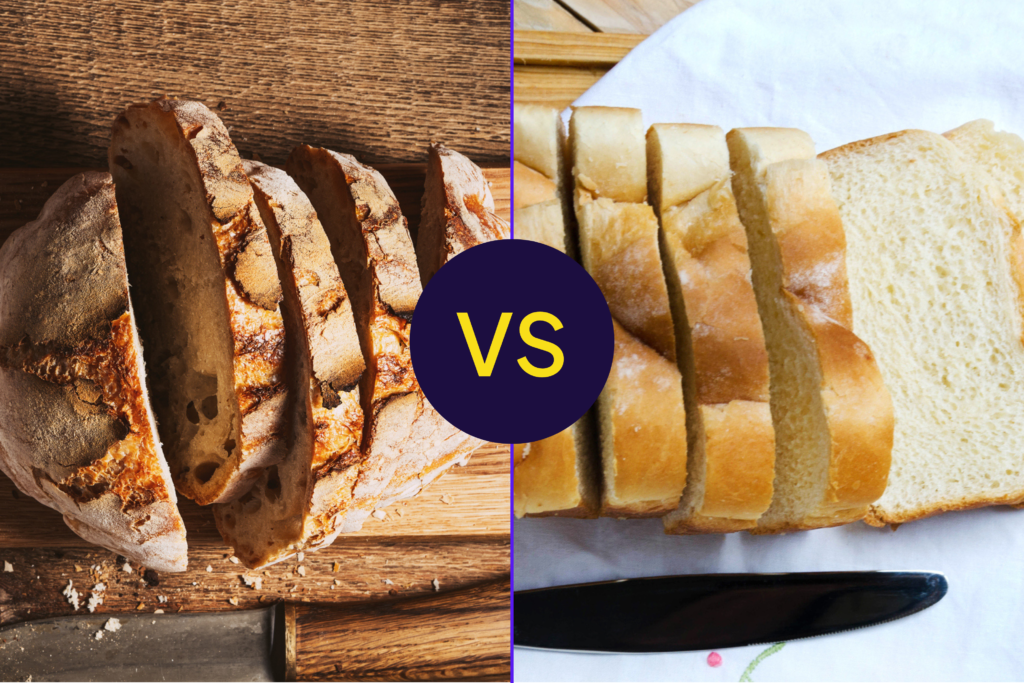
Bread can significantly affect blood sugar, though the impact varies based on factors such as protein and fiber content and how easily the bread is digested. For instance, sourdough may lead to a gentler rise in blood sugar than regular white bread, but factors such as ingredients and portion size also play a role. Here’s how both breads compare when it comes to blood sugar.
Sourdough is made using a naturally fermented starter of wild yeast and bacteria instead of commercial yeast, which is commonly used in breads like white bread.
The fermentation process not only gives sourdough its signature tangy flavor and slightly chewy texture, but also makes the bread blood-sugar-friendly.
During fermentation, sourdough develops organic acids, such as lactic and acetic, that help slow the rate at which starch is broken down and absorbed. This means glucose enters the bloodstream gradually compared to non-fermented bread made with baker’s yeast, which lacks these acids.
In addition to its slower absorption, sourdough has a lower glycemic index (GI) than white bread. The GI is a measure of how quickly carbohydrate-rich foods increase blood sugar. Low-GI foods score less than 55, moderate GI foods score between 56 and 69, and high-GI foods score greater than 70. Foods with higher scores have a significant impact on blood sugar.
A typical 30-gram slice of white wheat bread has a GI of around 71, classifying it as high, whereas the same amount of sourdough bread has a GI of 54, making it a low-GI food.
Because of these differences, sourdough may be a smarter choice for maintaining stable blood sugar compared with conventional white bread.
White bread is typically made from refined wheat flour, which is low in fiber and high in rapidly digestible starch that’s quickly absorbed into the bloodstream.
Also, white bread doesn’t undergo the fermentation process that helps slow carbohydrate digestion and the absorption of glucose into the bloodstream.
Research indicates that frequent consumption of refined grains that are low in fiber and high on the glycemic index, like white bread, may raise the risk of type 2 diabetes, as they’re quickly broken down into glucose, leading to sharp increases in blood sugar and insulin.
For individuals monitoring their blood sugar, such as those with type 2 diabetesopting for lower-GI foods like sourdough bread instead of higher-GI options like white bread can help maintain stable glucose levels and support healthier long-term blood sugar management.
This doesn’t mean white bread needs to be completely avoided, but it’s important to be mindful of its effect on blood sugar and to pay attention to portion sizes and how often it’s consumed.
If you’re monitoring blood sugar, you don’t have to give up bread entirely.
These tips can help you pick the most blood sugar-friendly loaf:
- Choose whole grains:When possible, choose breads that list “whole wheat” or other whole grains, like oats, as the first ingredient. Whole-grain breads contain fiber and higher levels of vitamins and minerals, ironand B vitamins.
- Check fiber content:Fiber helps slow glucose absorption and is a key nutrient for managing blood sugar. Buy bread that provides at least 3 grams of fiber per slice.
- Avoid added sugars:Some breads, including processed white breads and some kinds of sweetened sourdough, contain added sugars that can spike blood sugar. Avoid breads made with added sugar when you can or choose breads that contain under 3 grams of added sugar per slice.
In addition to choosing healthy breads, portion size and what you eat with your bread are key for managing blood sugar.
Stick to one or two slices per meal and pair them with protein, healthy fatsand fiber.
Combining bread with foods rich in protein or fiber, like beans, turkey, eggs, or avocado, can slow glucose absorption and improve feelings of satiety, which are both key for healthy blood sugar management.
Disclaimer: This news article has been republished exactly as it appeared on its original source, without any modification.
We do not take any responsibility for its content, which remains solely the responsibility of the original publisher.
Disclaimer: This news article has been republished exactly as it appeared on its original source, without any modification.
We do not take any responsibility for its content, which remains solely the responsibility of the original publisher.
Author: uaetodaynews
Published on: 2026-01-05 18:47:00
Source: uaetodaynews.com