
Education Dept. Green Lights Iowa’s Block Grant Request The 74
Get stories like this delivered straight to your inbox.Sign up for The 74 Newsletter
In a small taste of what the Trump administration would like to see nationwide, Iowa can now consolidate $9 million in federal education funds into a single block grant.
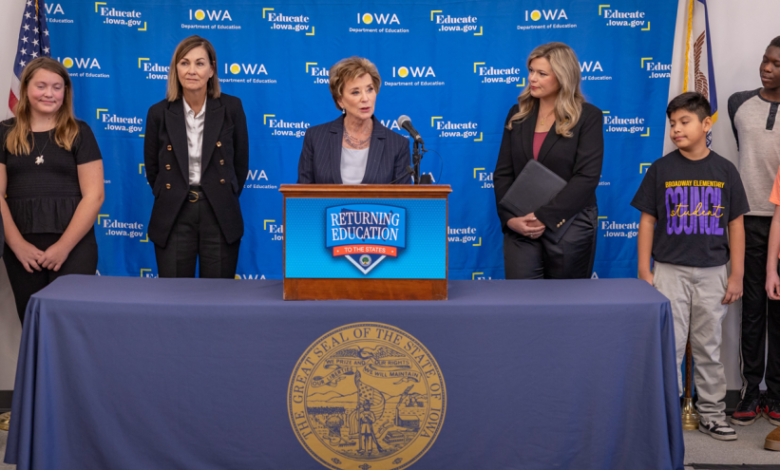
The Department of Education granted the state a waiver to blend the funds from programs that support teacher quality, English learners, student enrichment and afterschool programs, a move that Iowa Gov. Kim Reynolds said will shift “nearly $8 million and thousands of hours of staff time from bureaucracy to actually putting that expertise and those resources in the classroom.”
During an
“>▶ عرض المحتوى المضمّن
in western Iowa town of Denison, Education Secretary Linda McMahon called the move a “groundbreaking first step that gives state leaders control over federal education dollars.”
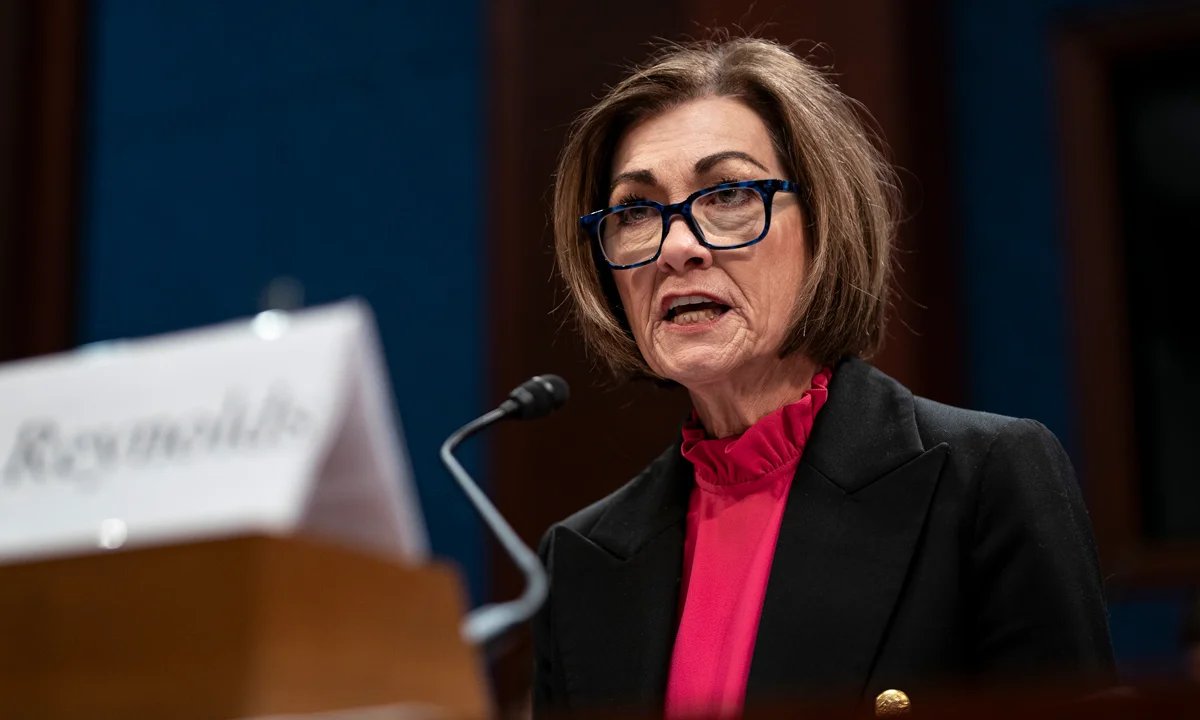
The waiver, however, is not as expansive as what Reynolds, a Republican, originally floated when she announced the request in March. The funding flexibility only applies to the dollars the state manages, not federal funds going to districts, such as money for low-income students.
Anne Hyslop, director of policy development at All4Ed, an advocacy group — and a former Education Department official — called the consolidation of funds for state activities “unprecedented,” but noted that the state scaled down its application after conversations with the department. “This is not the seismic shift in federal funding that perhaps was first contemplated in their original draft.”
The department also granted the state an Ed Flex waiverwhich releases districts from some requirements tied to federal programs and gives them time to spend the money. But 11 statesboth blue and red, already participate in that program.
The Iowa request is one of six before the department. Indianafor example, has asked for a similar block grant, while both Indiana and Kansas want to make changes to their accountability systems. Once McMahon grants one, it will be “hard to say no to another state that shows up with the same asks,” said Adam Schott, former acting assistant secretary for elementary and secondary education during the Biden administration.
Block granting federal funds with the aim of reducing bureaucracy and giving states and districts authority over spending has long been a Republican policy goal. Supporters argue that block grants are a efficient way to address local issues and can reduce staff time spent on paperwork. But skeptics argue that the students whom Congress intended to help through specific programs could be shortchanged as states shift funds to other priorities.
“I see how this could help to perhaps reduce redundancies, but at what expense?” asked Melissa Peterson, legislative and policy director for the Iowa State Education Association, an affiliate of the National Education Association. “We do have grave concerns that some of the various student populations may, quite frankly, not receive the services as intended.”
Republicans pushed for education block grants almost as soon as Congress established the Department of Education. In 1981, the Reagan administration consolidated 28 education programs in the Chapter 2 block grant. But Congress kept cutting funds for the program, and results were mixed.
In 1998, the House passed the Dollars to the Classroom Act, another block grant. Conservatives liked the “political symbolism of getting Washington out of what has traditionally been a state role,” said Vic Klatt, who worked at the department during George H.W. Bush’s administration and then spent several years working on education policy for House Republicans.
But no one, he said, ever wanted to get rid of the major programs, like Title I for high-poverty schools and the Individuals with Disabilities Education Act. The bill died in the Senate.
‘The data collection burden’
Some school finance experts stress that the Every Student Succeeds Act, the primary education law, already offers a lot of flexibility to combine funds. But Catherine Pozniak, a consultant based in Louisiana who works with states on waiver requests, said agencies and districts still struggle to manage multiple programs. The “grievances” that Iowa and Indiana have expressed are real, she said.
“Flexibilities exist, but they are actually quite difficult to take advantage of,” she said.
While the department didn’t waive requirements related to data collection and reporting, McMahon wrote in her letter to the state that “the conversations between our staff have been informative and insightful regarding the data collection burden” on states and districts.
Jim Blew, co-founder of the conservative Defense of Freedom Institute, called the announcement a “remarkable breakthrough” and said he hopes all states would try to follow Iowa’s example. “One of the most burdensome parts of dealing with the Education Department is the reporting,” he said. The agency “just needs time to think through how allowing it in one state will impact others, but I’ll bet they are going to make that a priority.”
Schott challenged the argument that reporting how states are using federal funds is a waste of time.
“One person’s compliance is another person’s accountability, transparency and general prudent treatment of funds,” he said. ”The reason you’ve got these discrete funding streams is not to make someone’s life difficult. It’s to make sure that marginalized student groups don’t have to fight and claw for the resources they’re going to need to access a high-quality education.”
In her comments during the event, McKenzie Snow, Iowa’s education chief, talked about using the flexibility to better train teachers to serve the state’s growing English learner population, which has increased by 40% over the past decade, she said. But Hyslop said the state has yet to “make a compelling case” for how the waiver would improve outcomes for those students.
For Snow, block grants are a familiar strategy. She served as an aide to former Education Secretary Betsy DeVos during Trump’s first administration.
At the time, DeVos proposed combining 29 programs into a $19.4 billion fund that would give states and districts authority over how to spend the money. Democrats, who had control of the House at the time, didn’t support the idea, and even some Republicans in both houses rejected the proposal.
As Iowa’s chief, Snow asked the department to waive annual assessment requirements in the Perry Community School District following a 2024 school shooting at Perry High School that left two dead and six injured.
Schott said most of the waiver requests he received were due to similar tragedies or natural disasters that forced students to miss school. But he always urged states to work with regional education labs or other outside centers to evaluate how the changes they made affect students.
That will be difficult, Hyslop said, due to the Trump administration’s efforts to downsize and shut down the Education Department.
“The department has fewer staff to monitor right now,” she said. “Understanding the impact of this is going to be really challenging.”
Did you use this article in your work?
We’d love to hear how The 74’s reporting is helping educators, researchers, and policymakers.Tell us how
Disclaimer: This news article has been republished exactly as it appeared on its original source, without any modification.
We do not take any responsibility for its content, which remains solely the responsibility of the original publisher.
Author:Linda Jacobson
Published on:2026-01-08 00:45:00
Source: www.the74million.org
Disclaimer: This news article has been republished exactly as it appeared on its original source, without any modification.
We do not take any responsibility for its content, which remains solely the responsibility of the original publisher.
Author: uaetodaynews
Published on: 2026-01-08 01:57:00
Source: uaetodaynews.com