
Inside The 20252030 Dietary Guidelines For Americans
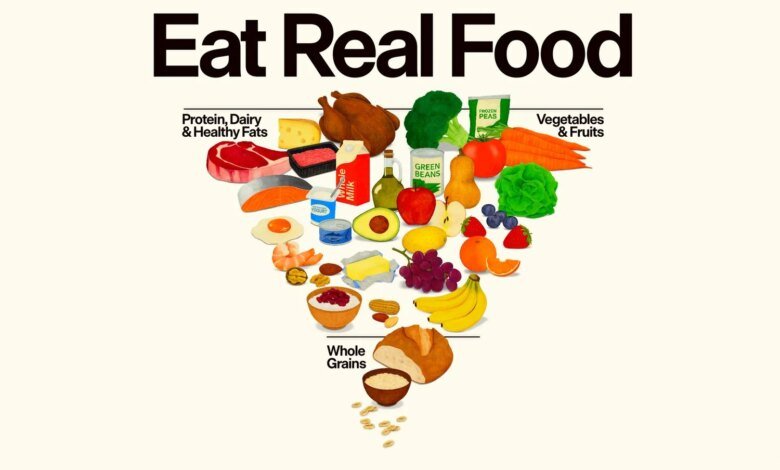
- The 2025–2030 Dietary Guidelines for Americans center “real food” as the foundation of health, urging people to eat whole foods and fewer highly processed products.
- For the first time, the guidelines recommend avoiding highly processed foods and added sugars entirely, while also limiting artificial flavors, dyes, and preservatives.
- The new guidance increases daily protein targets, relaxes restrictions on healthy fats from whole-food sources, and simplifies alcohol advice to “consume less.”
The Trump administration recently unveiled new Dietary Guidelines for Americans that emphasize high-quality protein, healthy fats, fruits, vegetables, and whole grains. While recommendations largely echo longstanding guidance aimed at preventing or managing chronic disease, they take a notably stronger position on cutting out highly processed foods and refined sugar.
“As secretary of Health and Human Services, my message is clear: Eat real food,” HHS Secretary Robert F. Kennedy Jr. said at a White House briefing announcing the changes. He then described it as “the most significant reset of federal nutrition policy in history” as the administration revealed a new food pyramid with red meat, cheese, whole milk, vegetables, and fruits pictured at the top.
and و the و The – تفاصيل مهمة
The previous set of guidelinesissued in 2020, spanned than 150 pages, whereas the new 2025–2030 document is only 10 pages. The core message is a renewed focus on “real foods,” but here’s a closer look at the most significant changes.
The most significant changes in the 2025-2030 Dietary Guidelines for Americans
One of the most notable shifts in the 2025–2030 Dietary Guidelines for Americans is how clearly it centers real, whole food as the foundation of health. “What’s encouraging is that the guidelines are explicitly calling out highly processed foods as a driver of poor health outcomes and reframing real food not as a trend, but as the baseline,” says Samantha PetersonRD, a registered dietitian and cofounder of Simply Wellness. “That said, ‘eat real food’ still needs context, because ‘real food’ doesn’t mean expensive, exclusive, or perfect, and it doesn’t mean never eating packaged foods again. It means prioritizing meals that nourish the body most of the time to support energy, digestion, and long-term health.”
With that broader shift in mind, here’s what the new guidelines include.
the و of و as – تفاصيل مهمة
Reduce highly processed food
For the first time, the guidelines are explicitly calling for Americans to avoid eating highly processed foods — such as chips, cookies, candy, sugary cereal, and deli meats — after research found strong links between processed foods and negative health outcomes like chronic disease and poor gut health.
“These recommendations are in line with current health and nutrition evidence because added sugars and highly processed foods have been shown time and again to increase inflammation and oxidative stress, cause weight gain, and increase the risk of preventative disease,” says Jennifer BianchiniRD, a functional dietitian and founder of Body to Soul Health.
Limit sugar, artificial flavors, dyes, and preservatives
The guidelines urge people to cut back on foods and beverages with artificial flavors, dyes, preservatives, and low-calorie sweeteners, including soda, fruit juice, energy drinks, candy, and many salad dressings. They also state no amount of added sugar is recommended for Americans — especially children — and that meals should contain no than 10 grams of added sugar, or about two teaspoons. Previous guidance advised that children under two consume no added sugar, while everyone else limits added sugar to less than 10 percent of daily calories. For a 2,000-calorie diet, that equals roughly 12 teaspoons per day.
Bianchini signs off on this advice, noting that “real food is what nourishes the body, supports metabolic and gut health, and helps the body function optimally.”
and و added و of – تفاصيل مهمة
Getty Images
Eat protein
Previous dietary standards recommended 0.8 grams of protein per kilogram of body weight — the minimum needed to prevent deficiency. New guidelines raise that range to 1.2 to 1.6 grams per kilogram, which is equivalent to about 82 to 109 grams of protein per day for a 150-pound person. This is a solid starting point, but Peterson says the guidelines don’t fully account for differences in protein needs among women, older adults, active individuals, or people with certain chronic health conditions. “The science supports the direction, but personalization is still where the real impact happens,” she says.
The updated guidelines also emphasize protein quality, encouraging consumption of “high-quality, nutrient-dense protein foods” from a range of sources, including poultry, eggs, red meat, beans, nuts, and seeds. That said, some experts are concerned about the laud of red meat, which is now shown at the top of the food pyramid, since too much is linked to higher risk of heart disease, type 2 diabetes, and certain cancers. “The prioritization of animal-based as opposed to plant-based is inconsistent with research on diet and health,” says Marion Nestlea professor emerita of nutrition, food studies, and public health at New York University.
Consume “less” alcohol
The guidelines say to “consume less alcohol for better overall health,” while pregnant people, individuals overcoming alcohol abuse, and those taking medications that can interact with alcohol should avoid it entirely. This differs from previous guidance, which advised Americans to abstain or drink in moderation, with limits of up to two drinks per day for men and one drink per day for women, says registered dietitian Jordan LanghoughRD.
of و to و the – تفاصيل مهمة
When asked to clarify the changes at the White House press briefing, Mehmet Oz, administrator of the Centers for Medicare and Medicaid Services said, “Alcohol is a social lubricant that brings people together.”
Oz then went on to state, “In the best-case scenario, I don’t think you should drink alcohol, but it does allow people an excuse to bond and socialize, and there’s probably nothing healthier than having a good time with friends in a safe way.”
This comes after the World Health Organization previously said no amount of alcohol is safe for health. Langhough also worries that the “drink less” guideline will create confusion and negative health impacts amongst the public, since strong evidence shows alcohol consumption increases the risk of certain cancers and chronic disease, as well as problems with cholesterol and blood pressure.
Incorporate healthy fats
The new guidance steps back from long-standing advice to limit fats, instead encouraging Americans to get them from whole-food sources — like meat, olive oil, or avocados — while keeping total saturated fat intake under 10 percent of daily calories. It also recommends people eat full-fat dairy and cook with butter or beef tallow.
and و the و to – تفاصيل مهمة
This marks a significant departure from earlier recommendations that cautioned against these fats due to their higher saturated fat content, which has been associated with increased cardiovascular riskexplains registered dietitian Yvette HillRDN. “There are questions and concerns around the mention of butter and beef tallow because these are saturated fats, so people should not go swapping out all their olive oil for butter,” she says.
Getty Images
The recommendation to increase fat intake is also contradictory, according to Nestle. “If you increase the amount of protein, meat, and full-fat dairy in your diet, you will not be able to keep your saturated fat intake below 10 percent of calories, and will have a harder time maintaining calorie balance,” she says.
The American Heart Association also has concerns about the advice. “While the guidelines highlight whole-fat dairy, the Heart Association encourages consumption of low-fat and fat-free dairy products, which can be beneficial to heart health,” the group said in a statement. “We are prepared to work collaboratively with the administration on initiatives to improve our understanding of the critical role healthy food can play in preventing and managing chronic disease.”
the و of و to – تفاصيل مهمة
Disclaimer: This news article has been republished exactly as it appeared on its original source, without any modification.
We do not take any responsibility for its content, which remains solely the responsibility of the original publisher.
Author:Andi Breitowich
Published on:2026-01-08 20:29:00
Source: www.foodandwine.com
Disclaimer: This news article has been republished exactly as it appeared on its original source, without any modification.
We do not take any responsibility for its content, which remains solely the responsibility of the original publisher.
Author: uaetodaynews
Published on: 2026-01-08 19:28:00
Source: uaetodaynews.com