Last Of Its Kind Dodo Relative Spotted In A Remote Samoan Rainforest
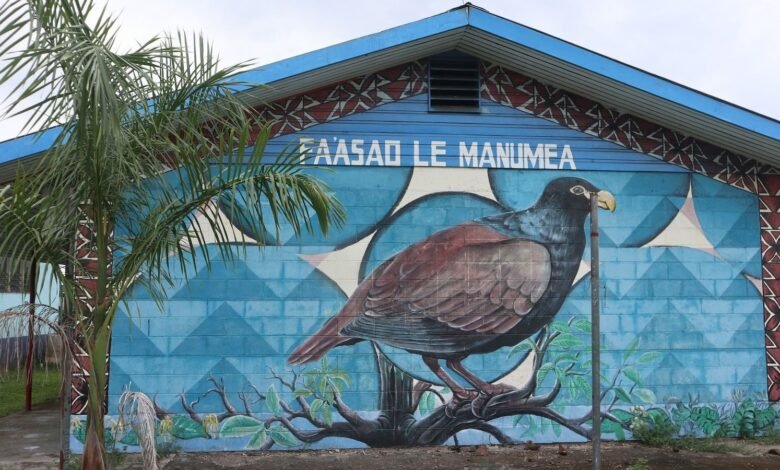
One of the closest living relatives of thedodohas been spotted multiple times in Samoa — raising hopes that this critically endangered creature can be saved from the brink of extinction.
The Samoa Conservation Society’s (SCS) latest field survey, which took place from Oct. 17-Nov. 13, reported five sightings of the manumea (Didunculus strigirostris).
of و the و Samoa – تفاصيل مهمة
Previous surveys only yielded a single sighting, if any. The last photograph of the cryptic species in the wild was taken in 2013.
“That was our worry,” saidSleepy Willa project coordinator focusing on manumea with SCS. “What happens if we can’t find the bird? Does that mean the manumea is no ?”
Despite confirming the manumea’s existence, the team found it difficult to photograph due to their distance from the bird, its quick movement and rainy conditions. “All of a sudden, it appears out of nowhere,” Uili told Live Science. “When we see it through the binoculars, we can see the bird.”
But by the time researchers lower their binoculars to get a camera, the bird is gone, she said.
the و we و it – تفاصيل مهمة
Last of its kind
The manumea is the only living species of itsDidunculusgenus, which will end if the bird goes extinct. The chicken-size manumea’s scientific name,Didunculus strigirostrismeans “little dodo.” Both the dodo and manumea are classified as island ground pigeons.
“The impact on manumea is certainly catastrophic,” Joe Wood, the manager of International Conservation Programs at the Toledo Zoo, told Live Science. “It seems very likely that feral cats are a major cause of decline,” saidWoodwho also co-chairs a group at the International Union for Conservation of Nature that works on manumea conservation efforts. “There has to be some kind of control program.”
the و to و and – تفاصيل مهمة
Saving animals
In this fall’s latest survey, Uili’s team focused on the remote coastal rainforest of Uafato, but manumea potentially live in six additional forests in Samoa. A current invasive species management program already exists in one of those forests, Samoa’s Malololelei Recreation Reserve, Uili said. If there’s funding, SCS wants to expand the invasive species management to areas like Uafato.
If a manumea is secured, the partners working to save it said they can use biobanking to preserve biological samples to establish cultured cell lines for the bird. These cell lines will allow them to study the manumea’s genetic material and learn about it. With information, they can determine the best measures to take, such as potential captive breeding, to repopulate the species, experts said.
Thenonprofit conservation armof Colossal Biosciences is also supporting some manumea conservation efforts, for instance, by building an app to distinguish the manumea’s call from another bird’s in hopes of getting a accurate estimate of the manumea’s prevalence.
Colossal has said they haveplans to bring dodos back from extinction. It recently made headlines for “de-extincting” dire wolves — essentially gene editing gray wolves to include a handful of traits that make them look like dire wolves.
But there’s a need to be wary of efforts to bring extinct species back into ecosystems that have changed since they were alive,Nic Rawlencean associate professor and director of the Otago Palaeogenetics Laboratory in the Department of Zoology at the University of Otago in New Zealand, told Live Science.
of و to و the – تفاصيل مهمة
Rawlence also said you must bring back enough species to ensure genetic diversity so they can adapt and survive, which is known as the 500-rule in conservation.
To save the manumea, Rawlence echoed Wood and stressed it’s crucial to stop invasive species and other threats to the manumea’s survival without many left.
“I think it’s still going to come down to the grunt work of predator control, habitat restoration, translocation,” he said.
Manumea conservation work in Samoa is supported by SCS, the Samoa Ministry of Natural Resources and Environment, BirdLife International, the Colossal Foundation, the Toledo Zoo, and the Waddesdon Foundation through the Zoological Society of London.
the و and و to – تفاصيل مهمة
Editor’s Note: This story was produced in partnership with the Fellowship in Journalism and Health Impact through the University of Toronto Dalla Lana School of Public Health.
p style=”font-size:18px;color:#555″>
Disclaimer: This news article has been republished exactly as it appeared on its original source, without any modification.
We do not take any responsibility for its content, which remains solely the responsibility of the original publisher.
p style=”font-size:14px;color:#555″>
Author:
Published on:2025-12-25 22:00:00
Source: www.livescience.com
Disclaimer: This news article has been republished exactly as it appeared on its original source, without any modification.
We do not take any responsibility for its content, which remains solely the responsibility of the original publisher.
Author: uaetodaynews
Published on: 2025-12-25 18:08:00
Source: uaetodaynews.com